Mostrando entradas con la etiqueta Human rights. Mostrar todas las entradas
Mostrando entradas con la etiqueta Human rights. Mostrar todas las entradas
miércoles, 3 de junio de 2020

The lord of the flies

After that we will prepare some activities.
The movie is bassed in the book with the same name, written by Wilian Golding.
You can read the book in original version, o in spanish version (press download green boton).
At the end send me the activities before the 18 of june
miércoles, 25 de marzo de 2020
Creating a Infografía about Coronavirus
We go to create a Infografia about the Coronavirus. It is a free approach: How we can protect from illness? or How we can Help to control the dissemination? How we can organize the time in our houses? What do you know about coronavirus?.... In english or spanish language. Put your name on the infografía.
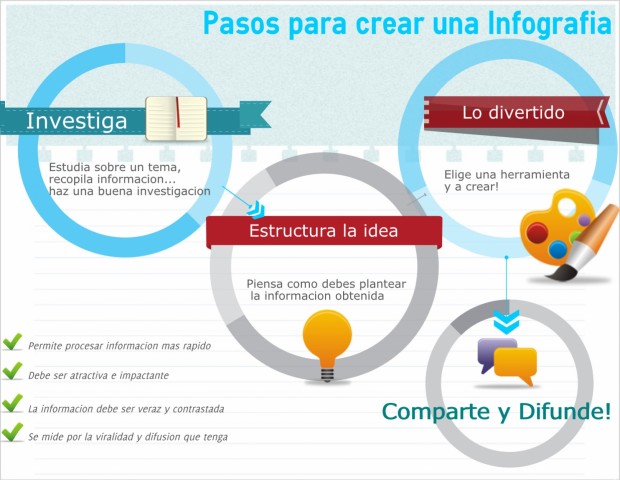
You can use to create:
https://www.easel.ly/
https://piktochart.com/
http://www.tagxedo.com/

You can use to create:
https://www.easel.ly/
https://piktochart.com/
http://www.tagxedo.com/

miércoles, 22 de enero de 2020
Champions of Human Rights

- Why is the reason to choose them ?
- What are the most important rights achieved by them?
- Make a summary about their lives.
- All pupils choose Mandela as a obligate champion.
miércoles, 15 de enero de 2020
Human Rights in Africa
Enlace
Homework:
After the video.
- What do you know about Gando Community?
- How was the Human Rights situation in Gando?
- Are there real change in the Human Rights today in Africa?
- What do you think about Diébédo Francis Kéré?
miércoles, 8 de enero de 2020
Universal Declaration of Human Rights
 Universal Declaration of Human Rights
Simplified VersionThis is a simplified version of the 30 Articles of the Universal Declaration of Human Rights, (videos about human right).
1. We Are All Born Free & Equal. We are all born free. We all have our own thoughts and ideas. We should all be treated in the same way.
2. Don’t Discriminate. These rights belong to everybody, whatever our differences.
3. The Right to Life. We all have the right to life, and to live in freedom and safety.
4. No Slavery. Nobody has any right to make us a slave. We cannot make anyone our slave.
5. No Torture. Nobody has any right to hurt us or to torture us.
6. You Have Rights No Matter Where You Go. I am a person just like you!
7. We’re All Equal Before the Law. The law is the same for everyone. It must treat us all fairly.
8. Your Human Rights Are Protected by Law. We can all ask for the law to help us when we are not treated fairly.
9. No Unfair Detainment. Nobody has the right to put us in prison without good reason and keep us there, or to send us away from our country.
10. The Right to Trial. If we are put on trial this should be in public. The people who try us should not let anyone tell them what to do.
11. We’re Always Innocent Till Proven Guilty. Nobody should be blamed for doing something until it is proven. When people say we did a bad thing we have the right to show it is not true.
12. The Right to Privacy. Nobody should try to harm our good name. Nobody has the right to come into our home, open our letters, or bother us or our family without a good reason.
13. Freedom to Move. We all have the right to go where we want in our own country and to travel as we wish.
14. The Right to Seek a Safe Place to Live. If we are frightened of being badly treated in our own country, we all have the right to run away to another country to be safe.
15. Right to a Nationality. We all have the right to belong to a country.
16. Marriage and Family. Every grown-up has the
right to marry and have a family if they want to. Men and women have
the same rights when they are married, and when they are separated.
17. The Right to Your Own Things. Everyone has the right to own things or share them. Nobody should take our things from us without a good reason.
18. Freedom of Thought. We all have the right to believe in what we want to believe, to have a religion, or to change it if we want.
19. Freedom of Expression. We all have the right to make up our own minds, to think what we like, to say what we think, and to share our ideas with other people.
20. The Right to Public Assembly. We all have the right to meet our friends and to work together in peace to defend our rights. Nobody can make us join a group if we don’t want to.
21. The Right to Democracy. We all have the right to take part in the government of our country. Every grown-up should be allowed to choose their own leaders.
22. Social Security. We all have the right to affordable housing, medicine, education, and childcare, enough money to live on and medical help if we are ill or old.
23. Workers’ Rights. Every grown-up has the right to do a job, to a fair wage for their work, and to join a trade union.
24. The Right to Play. We all have the right to rest from work and to relax.
25. Food and Shelter for All. We all have the right to a good life. Mothers and children, people who are old, unemployed or disabled, and all people have the right to be cared for.
26. The Right to Education. Education is a right. Primary school should be free. We should learn about the United Nations and how to get on with others. Our parents can choose what we learn.
27. Copyright. Copyright is a special law that protects one’s own artistic creations and writings; others cannot make copies without permission. We all have the right to our own way of life and to enjoy the good things that art, science and learning bring.
28. A Fair and Free World. There must be proper order so we can all enjoy rights and freedoms in our own country and all over the world.
29. Responsibility. We have a duty to other people, and we should protect their rights and freedoms.
30. No One Can Take Away Your Human Rights.
17. The Right to Your Own Things. Everyone has the right to own things or share them. Nobody should take our things from us without a good reason.
18. Freedom of Thought. We all have the right to believe in what we want to believe, to have a religion, or to change it if we want.
19. Freedom of Expression. We all have the right to make up our own minds, to think what we like, to say what we think, and to share our ideas with other people.
20. The Right to Public Assembly. We all have the right to meet our friends and to work together in peace to defend our rights. Nobody can make us join a group if we don’t want to.
21. The Right to Democracy. We all have the right to take part in the government of our country. Every grown-up should be allowed to choose their own leaders.
22. Social Security. We all have the right to affordable housing, medicine, education, and childcare, enough money to live on and medical help if we are ill or old.
23. Workers’ Rights. Every grown-up has the right to do a job, to a fair wage for their work, and to join a trade union.
24. The Right to Play. We all have the right to rest from work and to relax.
25. Food and Shelter for All. We all have the right to a good life. Mothers and children, people who are old, unemployed or disabled, and all people have the right to be cared for.
26. The Right to Education. Education is a right. Primary school should be free. We should learn about the United Nations and how to get on with others. Our parents can choose what we learn.
27. Copyright. Copyright is a special law that protects one’s own artistic creations and writings; others cannot make copies without permission. We all have the right to our own way of life and to enjoy the good things that art, science and learning bring.
28. A Fair and Free World. There must be proper order so we can all enjoy rights and freedoms in our own country and all over the world.
29. Responsibility. We have a duty to other people, and we should protect their rights and freedoms.
30. No One Can Take Away Your Human Rights.
Tasks/homework.Investigate:
1. Classify the different Human rights in one of the three generations. When they appear?
2. Look for countries where human rights are broken..
3. How are the Human Rights in developed countries?
4. How are the Human Rights in undeveloped countries?
5 What is the ONU? What is its finality?
miércoles, 18 de diciembre de 2019

miércoles, 6 de noviembre de 2019
The Butterfly Circus and the History of one perseverance
- What are the most important elements in Nick's story? Make a list
- How inspires other not to give up when it comes to the unexpected?
- What makes your life a model?
lunes, 23 de enero de 2017
martes, 31 de mayo de 2016
lunes, 21 de marzo de 2016


miércoles, 16 de marzo de 2016
Defying at life
Challenges to do at life: Panyee FC Subtitulado en Español Historias de Superación y Motivación
The boy who changed thousands of lives
Link in spanish
Ryan Well´s Foundations
The boy who changed thousands of lives
Link in spanish
Ryan Well´s Foundations
miércoles, 24 de febrero de 2016
martes, 12 de enero de 2016
The History of Human Rights
After the video, talk with Cristina and make a Summary
Watch the Documentary
The concept of human rights has evolved through different phases in human history. A general definition of human rights is that they are the "rights and freedoms to which all humans are entitled". Philosophers and thinkers advocating the concept of human rights are of the view that everyone is endowed with certain entitlements merely by reason of being human.
Human Rights Concept is egalitarian and Universal
Therefore human rights are universal and egalitarian in their concept. Human beings cannot be treated on unequal terms in the application of human rights norms. These human rights can be in the form of shared norms of actual human moralities, as justified moral norms or natural rights. They can also be in the form of legal rights either in the local legal system or in the international law. In spite of the development of human rights concept over ages through historical phases, there are no precise or specific norms to suggest what constitute human rights and what do not. In consequence, the incidence of heated debates in human right issues is increasing in resonance with the growth of human rights awareness across the global spectrum.
Modern Human Rights Movement from the Post World War II Period
Human rights in its modern conception developed after the World War II and the Holocaust and the consequent Universal Declaration of Human Rights by the United Nations General Assembly in 1948. Admittedly, the usage of the term "human rights" has evolved in recent times. But the concept of human rights has its intellectual foundations in the history of philosophy and the concepts of natural law rights and liberties dating back to the days of ancient Greek city states and the days of the Roman Law.
Modern Developments in Human Rights
Human rights concept in the modern times is the result of the enlightenment concept of natural rights evolved through the views of John Locke and Immanuel Kant. In the development of human rights, the United States Bill of Rights and the Declaration of the Rights of Man and of the Citizen have significant roles. It is important to note that Article 1 of the United Nations Universal Declaration of Human Rights (UDHR) upholds the need of human rights in these words: “All human beings are born free and equal in dignity and rights. They are endowed with reason and conscience and should act towards one another in a spirit of brotherhood.”
No Precise Starting Point for Human Rights in History
The concepts of rights and liberty existed form the ancient times. But it is not very clear as to whether they had the present meaning of the term ‘human rights’. Aristotle also wrote the citizens right to property and participation in public affairs. But universal human rights were never a concept entertained by the ancient Greeks or Romans thoughts. Hence, slavery was justified as a natural condition. Even Magna Carta was not a charter of human rights. It was rather a document to address specific political circumstances.
Human Rights in the 16th and 17th Centuries
The legal interpretations of human rights in their modern form can be found in the Twelve Articles (1525). They are deemed the first record of human rights in Europe. They were the result of the peasants' demands of the Swabian League in the German Peasants' War. Later in 1689, the English Bill of Rights and the Scottish Claim of Right made several governmental measures illegal.
Human Rights in the 18th Centaury
The 18th century revolutions in the United States (1776) and in France (1789), paved the way for the adoption of the United States Declaration of Independence and the French Declaration of the Rights of Man and of the Citizen respectively. Through these declarations, some legal rights of citizens were recognized. Another epoch-making declaration was the Virginia Declaration of Rights of. The Virginia Declaration facilitated the recognition of a number of fundamental civil rights and civil freedoms.
18th and 19th Century Philosophers
In the 18th and 19th centuries philosophers such as Thomas Paine, John Stuart Mill and G. W. F. Hegel infused much life in to the concept of human rights and the concept got more clarity of though Paine's ‘The Rights of Man’ and William Lloyd Garrison's ‘The Liberator’ which he wrote for "the great cause of human rights".
The Eventful 19th Centaury for Human Rights
In the 19th century, the concept of human rights has found its most manifest actions in the cause of slavery. In Britain, William Wilberforce’s efforts led to the abolition of slavery in the British Empire by the Slave Trade Act 1807 and the Slavery Abolition Act 1833. By mid-19th century, slavery had been abolished most of the United States. After the American Civil War and reconstruction period there came a number of amendments to the United States Constitution. The 13th amendment banned slavery in America and the 14th amendment ensured full citizenship and civil rights to all people born in the United States. Again, the 15th amendment went a step further and it guaranteed voting right to African Americans.
Freedom Movements in the 20th Century
In the 20th century, the efforts of several groups and movements have managed to achieve profound social changes all over the world. Labor movements in Western Europe and North America; labor unions and women's rights movements, etc. helped in creating more awareness about human rights. National liberation movements such as that led by Mahatma Gandhi to liberate his native India from British rule also helped in the propagation of human rights principles.
Task:
- Explain what are the Human Rights
- Make a Timeline about the main dates and men in the Human rights advances
miércoles, 25 de noviembre de 2015
Violence against women
Key facts:
- Violence against women - particularly intimate partner violence and sexual violence against women - are major public health problems and violations of women's human rights.
- Recent global prevalence figures indicate that 35% of women worldwide have experienced either intimate partner violence or non-partner sexual violence in their lifetime.
- On average, 30% of women who have been in a relationship report that they have experienced some form of physical or sexual violence by their partner.
- Globally, as many as 38% of murders of women are committed by an intimate partner.
- Violence can result in physical, mental, sexual, reproductive health and other health problems, and may increase vulnerability to HIV.
- Risk factors for being a perpetrator include low education, exposure to child maltreatment or witnessing violence in the family, harmful use of alcohol, attitudes accepting of violence and gender inequality.
- Risk factors for being a victim of intimate partner and sexual violence include low education, witnessing violence between parents, exposure to abuse during childhood and attitudes accepting violence and gender inequality.
- In high-income settings, school-based programmes to prevent relationship violence among young people (or dating violence) are supported by some evidence of effectiveness.
- In low-income settings, other primary prevention strategies, such as microfinance combined with gender equality training and community-based initiatives that address gender inequality and communication and relationship skills, hold promise.
- Situations of conflict, post conflict and displacement may exacerbate existing violence and present additional forms of violence against women.

The United Nations defines violence against women as "any act of gender-based violence that results in, or is likely to result in, physical, sexual or mental harm or suffering to women, including threats of such acts, coercion or arbitrary deprivation of liberty, whether occurring in public or in private life."
 Risk factors
Factors found to be associated with intimate partner and sexual violence occur within individuals, families and communities and wider society. Some factors are associated with being a perpetrator of violence, some are associated with experiencing violence and some are associated with both.
Risk factors for both intimate partner and sexual violence include:
- lower levels of education (perpetration of sexual violence and experience of sexual violence);
- exposure to child maltreatment (perpetration and experience);
- witnessing family violence (perpetration and experience);
- antisocial personality disorder (perpetration);
- harmful use of alcohol (perpetration and experience);
- having multiple partners or suspected by their partners of infidelity (perpetration); and
- attitudes that are accepting of violence and gender inequality (perpetration and experience).
- past history of violence;
- marital discord and dissatisfaction;
- difficulties in communicating between partners.
- beliefs in family honour and sexual purity;
- ideologies of male sexual entitlement; and
- weak legal sanctions for sexual violence.
Task: You have to make a women human rights poster. Must illustrate women rights violations (2-3 people for group).
miércoles, 18 de marzo de 2015
miércoles, 18 de febrero de 2015
Human rights in the world

Homework: How we make the difference? How we can change the real situation? Make a mural about the respect the people on world.
miércoles, 28 de enero de 2015
Blowing in the wind Bob Dylan, a song for the social change
How many roads most a man walk down
Before you call him a man ?How many seas must a white dove sail
Before she sleeps in the sand ?
Yes, how many times must the cannon balls fly
Before they're forever banned ?
The answer my friend is blowin' in the wind
The answer is blowin' in the wind.
Yes, how many years can a mountain exist
Before it's washed to the sea ?
Yes, how many years can some people exist
Before they're allowed to be free ?
Yes, how many times can a man turn his head
Pretending he just doesn't see ?
The answer my friend is blowin' in the wind
The answer is blowin' in the wind.
Yes, how many times must a man look up
Before he can see the sky ?
Yes, how many ears must one man have
Before he can hear people cry ?
Yes, how many deaths will it take till he knows
That too many people have died ?
The answer my friend is blowin' in the wind
The answer is blowin' in the wind.
Suscribirse a:
Entradas (Atom)